Olivia Hoffmann · 24 October 2026
Shifting Trade Route Disruptions and Their Effects on Dockside Inventory Rotation in Regional Harbor Networks
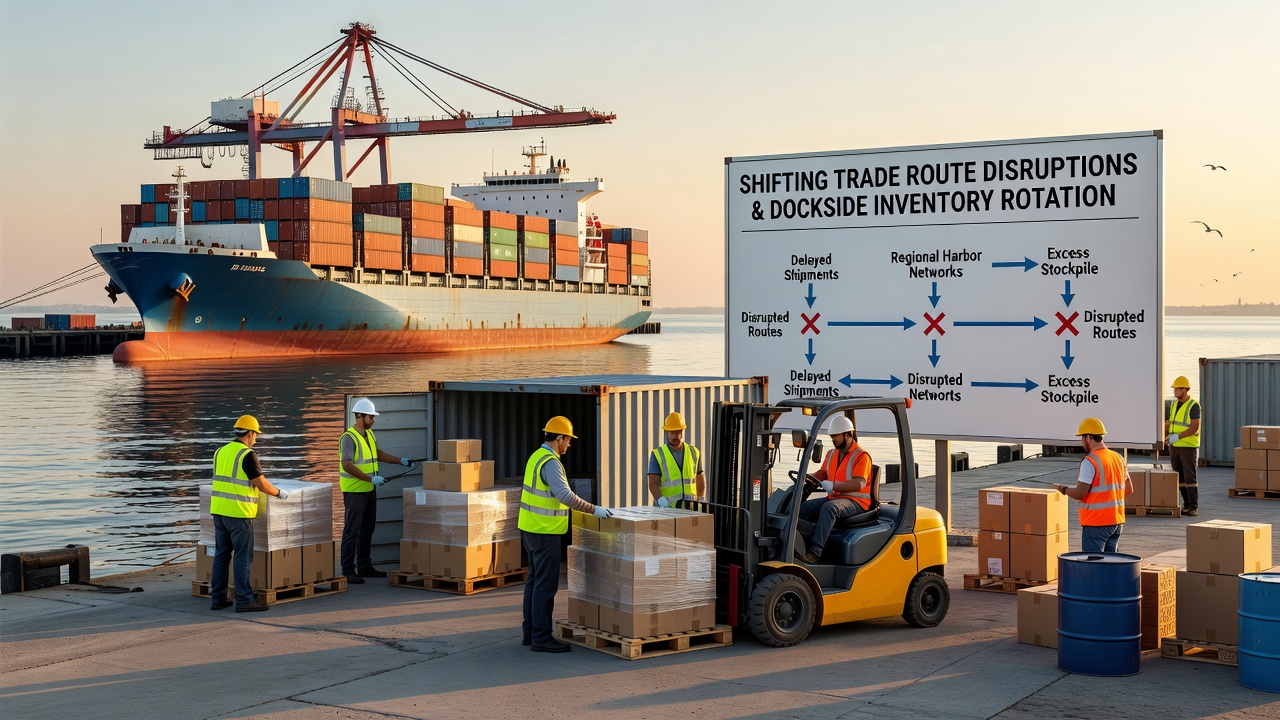
Global trade routes have undergone measurable shifts since the early 2020s, driven by geopolitical tensions, canal restrictions, and climate-related events that reroute vessels and alter arrival patterns at regional harbors. Data from the International Maritime Organization shows that container vessel diversions around the Cape of Good Hope increased by 38 percent in 2025 compared to 2023 baselines, extending transit times and compressing the windows available for cargo handling at destination ports. These changes directly influence dockside inventory rotation, the process by which incoming containers move from vessel to storage to onward transport, because longer voyages and unpredictable schedules reduce the predictability of stock turnover at terminal facilities.
Documented Causes of Route Adjustments
Researchers tracking vessel tracking data note that Red Sea security concerns and Panama Canal drought conditions continue to force carriers onto alternative paths through 2026. In October 2026, the Panama Canal Authority reported average daily transits remaining 12 percent below pre-2023 levels despite seasonal rainfall recovery, prompting shipping lines to maintain some Cape routing for Asia-to-Europe services. Observers at the European Maritime Safety Agency have recorded corresponding increases in vessel calls at Mediterranean and North Sea hubs that absorb diverted tonnage, creating uneven pressure on berth availability and yard capacity across connected regional networks.
Impacts on Inventory Rotation Metrics
Dockside inventory rotation relies on consistent vessel arrivals to maintain steady throughput rates, yet extended transit times introduce variability that disrupts planned container dwell periods. Studies from port authorities in Singapore and Rotterdam indicate that average container dwell time at affected terminals rose from 4.2 days in 2022 to 6.8 days by mid-2026, with empty container repositioning delays compounding the backlog. When vessels bunch after longer Cape routes, terminals experience surge arrivals that exceed crane and gate capacity, forcing operators to prioritize high-priority cargo while other containers remain stacked longer than scheduled rotation cycles allow.
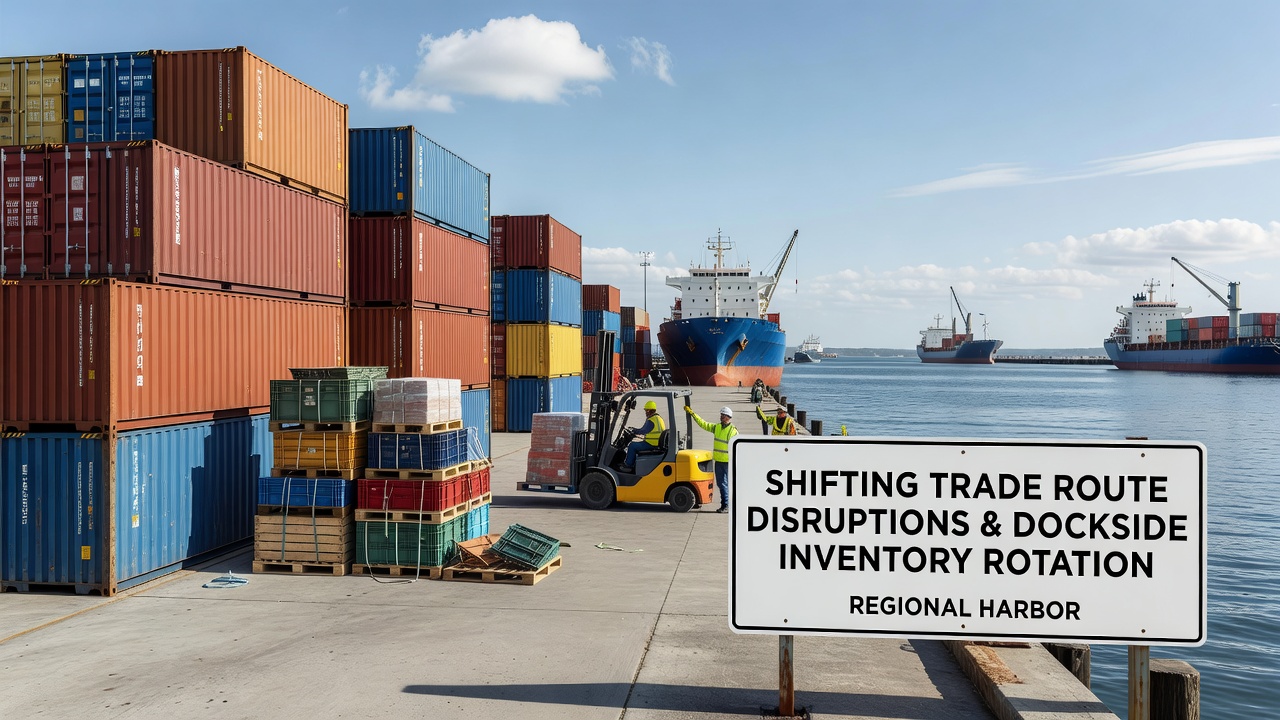
Regional harbor networks in the Gulf of Mexico and the Baltic Sea show similar patterns according to data compiled by the US Maritime Administration and the Helsinki Commission. Facilities in these areas absorbed rerouted services from Asia and the Americas, leading to temporary imbalances where import volumes outpaced export equipment availability. This mismatch slows the rotation of empty containers back into the supply chain, which in turn delays outbound vessel loading and creates secondary congestion at neighboring ports within the same regional cluster.
Regional Variations in Harbor Response
Ports along the US West Coast adjusted berthing windows and yard allocation algorithms after observing increased trans-Pacific traffic that previously transited the Suez Canal. Transport Canada figures reveal that Vancouver and Prince Rupert terminals recorded a 22 percent rise in container throughput during the first three quarters of 2026, with inventory systems adapted to handle longer storage periods through expanded reefer and hazardous cargo zones. Meanwhile, Australian ports in Melbourne and Sydney implemented revised rotation schedules after carriers shifted some Europe-bound services southward, according to reports from the Australian Maritime Safety Authority.
These adjustments demonstrate how regional networks coordinate to redistribute cargo flows when primary routes experience sustained disruption. Data integration between neighboring terminals allows operators to shift containers via coastal feeders or rail corridors, reducing dwell time spikes at any single facility. Yet the overall effect remains an increase in total system inventory because vessels spend more days at sea before containers reach their final rotation point.
Technology and Coordination Measures
Terminal operators have deployed predictive analytics platforms that ingest real-time AIS data and canal status updates to forecast arrival clustering up to 14 days ahead. Research published by the Port of Rotterdam Authority shows that such tools reduced unplanned yard congestion events by 19 percent during peak disruption periods in 2025 and 2026. Similar systems operate at the Port of Los Angeles, where gate appointment algorithms now incorporate extended transit buffers derived from route deviation statistics.
Collaboration across regional harbor networks includes shared equipment pools and synchronized empty container repositioning programs. These arrangements, documented in joint statements from the American Association of Port Authorities and the European Sea Ports Organisation, help stabilize rotation rates by moving surplus units between facilities before congestion fully develops. The approach has proven effective at limiting the amplification of delays that occur when one port's backlog spills into the next port in the network.
Conclusion
Shifting trade routes continue to reshape arrival patterns and inventory dynamics at regional harbor networks through October 2026 and beyond. Extended transit times and vessel bunching alter the timing and volume of containers reaching dockside storage, directly extending dwell periods and complicating rotation schedules. Regional responses that combine data sharing, adjusted berth planning, and coordinated equipment movements have mitigated some effects, yet the underlying increase in system-wide inventory persists wherever primary routes remain disrupted. Continued monitoring of canal conditions and geopolitical developments will determine whether rotation metrics stabilize or require further operational adaptations at affected terminals.